
- Location: 223-A, Jubilee Town Lahore, Pakistan
- Email: Info@delightindustries.pk
- Email: export@delightindustries.pk
Delight Industries operates a modern yarn spinning facility engineered for consistent count accuracy and technical reliability. We manufacture ring spun and open-end yarns from cotton, polyester, and blended fibers for international buyers requiring documented quality standards and container-load production capacity.
Our spinning unit maintains structured process controls from fiber intake through final winding reducing variation, minimizing contamination, and ensuring repeatable yarn characteristics across bulk orders. This operational discipline is what serious fabric mills and garment manufacturers depend on for their production planning
Excellence in textile manufacturing backed by certifications and global standards
Building trust through consistent quality and reliable textile manufacturing
Officially certified partner meeting global standards for premium textile production
Sustainable eco-friendly recycled materials for greener textile manufacturing
International quality management system certified for consistent excellence
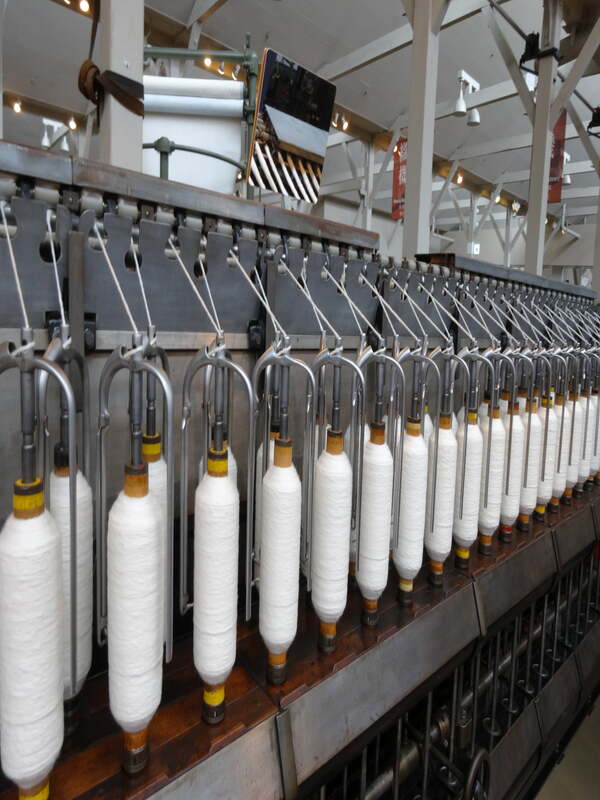
Since 2020, our Sheikhupura yarn spinning facility produces export-grade ring spun and open-end yarns for international buyers.
We operate modern European spinning systems manufacturing cotton, polyester, and custom blends with comprehensive quality testing at every production stage.
What defines our operations: consistent specifications, documented batch traceability, realistic lead time commitments, and direct technical communication.
We serve fabric mills and garment manufacturers who depend on predictable yarn quality for their production planning. Monthly capacity supports container-load orders.
Currently supplying buyers across EU, UK, USA, and Asian markets with established export documentation protocols.
Yarn quality is not achieved through final testing—it is built into production processes from raw material selection through winding operations. Our spinning facility maintains defined quality checkpoints at every stage to ensure consistent yarn characteristics.
Incoming cotton bales and synthetic fibers undergo quality verification including fiber length (staple length measurement), micronaire testing (fiber fineness), strength evaluation, trash and contamination screening, and moisture content verification. Bale mixing procedures ensure blend uniformity and reduce variation in yarn properties.
Blow room processes open and clean fibers, removing dust, trash particles, seed coat fragments, and foreign matter. Carding operations align fibers and produce uniform sliver formation. Our carding machines feature dual contamination clearing systems, XF (Extended Functionality) technology, and automated sliver weight monitoring.
Drawing frames blend and parallelize slivers from multiple carding machines, improving sliver uniformity and fiber blending homogeneity. For counts Ne 30s and above, combing operations remove short fibers, neps, and remaining impurities. Combed yarn delivers superior strength and smooth appearance—essential for premium fabric applications.
Roving frames attenuate drawn sliver and apply minimal twist for handling strength. Spinning operations (ring or rotor) convert roving into final yarn count with controlled spindle speed, traveler selection, balloon control, and tension management. Real-time monitoring systems track production parameters and alert operators to deviations requiring adjustment.
Winding operations serve as final quality assurance, detecting yarn faults (thick places, thin places, neps), contamination particles, slubs, and foreign matter. Our Autoconer winding machines clear defects automatically. Final inspection includes count verification (±2% tolerance), twist measurement, lea strength testing (CSP calculation), evenness testing (Uster statistics), and appearance grading.
Fabric mills and garment manufacturers face enough variables in their own production. Your yarn supplier should not be one of them. Here is why international buyers continue orders with Delight Industries.
We maintain ±2% count tolerance through continuous monitoring and calibration. Repeat orders match previous shipments in count accuracy, twist level, and strength characteristics—reducing fabric weight variation and dimensional issues in your downstream processing.
Dual contamination clearing systems at carding and automated electronic clearing at winding reduce foreign matter presence. Lower contamination means fewer fabric defects, reduced garment claims, and improved knitting/weaving efficiency.
Our spinning capacity supports container-load volumes without quality compromise. We provide realistic lead times based on actual production schedules—not optimistic promises. Production tracking systems allow visibility into order progress.
Our technical team understands fabric manufacturing requirements. We speak your language regarding CSP values, U%, TPI specifications, and application-specific yarn characteristics. Clear communication reduces sampling iterations and accelerates bulk order confirmation.
Complete testing reports, certificates of analysis, and traceability documentation maintained for buyer audits and compliance requirements. We coordinate third-party testing when specified and provide certified test results with every shipment.
Integrated operations from cotton procurement through yarn production enable competitive pricing without quality compromise. Volume-based pricing available for established buyers with committed monthly offtake.
Rieter and Trutzschler equipment maintained to factory standards with regular calibration and maintenance.
Detailed records ensure when you reorder, you get the same yarn properties as your last shipment.
GRS-certified recycled content blends that match virgin material yarns in strength and appearance.